


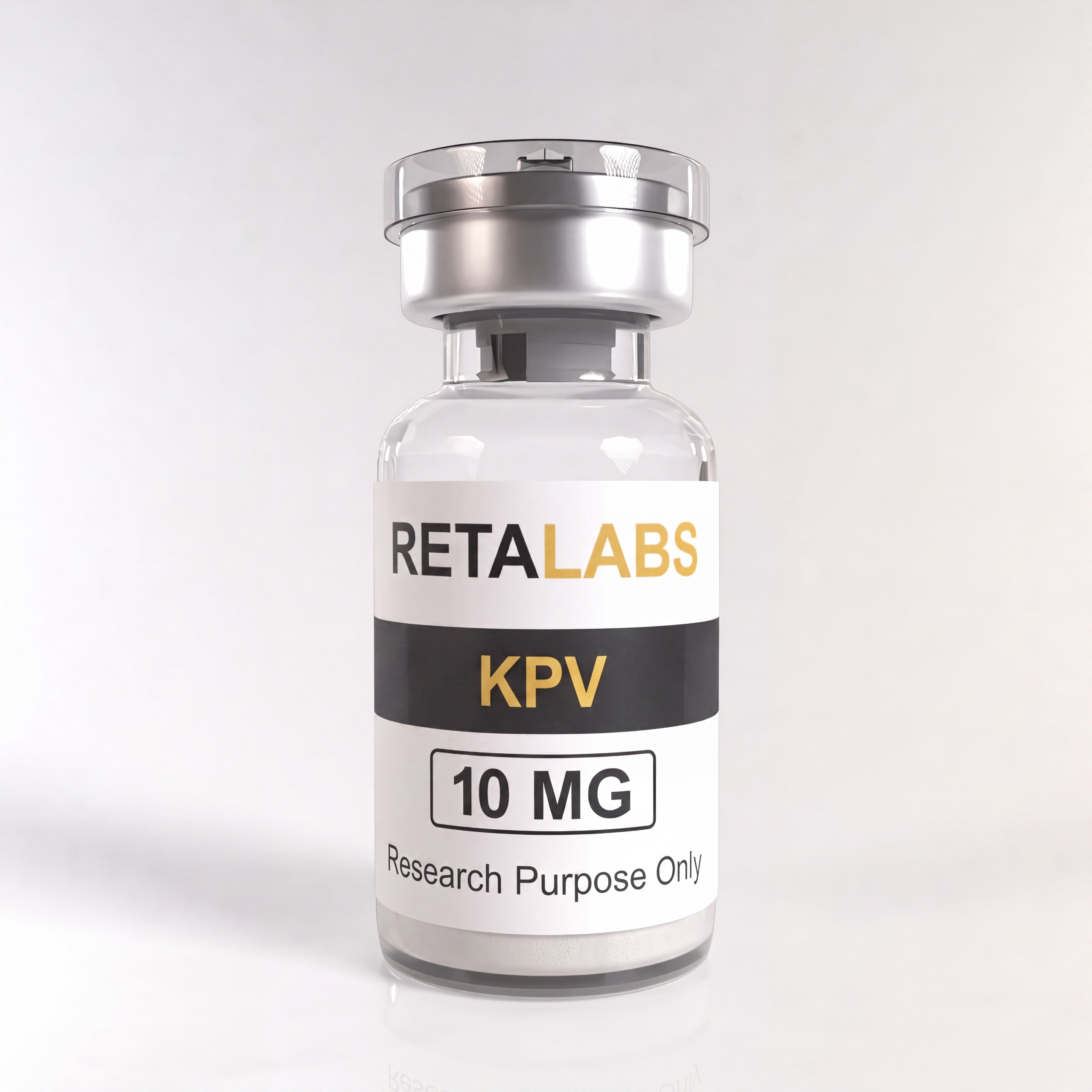
KPV
€ 57,45
Don't forget the reconstitution water
Required for dissolving freeze-dried peptides.
You have peptide vial peptide vials and BAC Water — we recommend 1 per vial. — we recommend 1 BAC Water per vial.
All products are intended for laboratory research only and are not suitable for human or animal consumption. By purchasing, the buyer agrees to use these products in accordance with all applicable laws.
This substance has not been evaluated or approved by the European (EMA), American (FDA) or Dutch (MEB/IGJ) medicines authorities for any human or veterinary use. No medical, therapeutic, diagnostic or preventive use is claimed or implied.
KPV (Lys-Pro-Val) is a short synthetic tripeptide derived from a naturally occurring amino acid fragment within larger peptide structures. It is widely studied within molecular, biochemical, and epithelial research due to its interaction with cellular signaling pathways and biological communication systems.
Due to its small size and high stability, KPV is often used in experimental models that focus on cellular interaction, molecular signaling, and pathway dynamics. Its simple structure makes it suitable for targeted analysis of peptide-driven biological processes within controlled research environments.
01History of KPV
KPV originated from research into biologically active peptide fragments, particularly from larger signaling proteins. Scientists found that certain short sequences, such as Lys-Pro-Val, preserve functional activity in cellular and molecular systems, leading to further research into their role in signaling and pathway modulation.
Over time, KPV has been investigated in various experimental models, especially within epithelial systems, cellular communication and biochemical signaling pathways.
02KPV Structure and Molecular Data
Peptide Name: KPV (Lys-Pro-Val)
Peptide Type: Tripeptide
Sequence: Lysine – Proline – Valine
Molecular Formula: C16H30N4O4
Molecular Weight: ~342.43 g/mol
KPV consists of a simple chain of three amino acids, which allows it to interact with specific molecular targets and signaling pathways. This minimal structure makes it particularly suitable for targeted research and pathway studies.
03KPV Research Findings
KPV has been investigated in various cellular, epithelial and molecular models, with a focus on signaling pathways and biological communication.
Research shows activity related to:
• Cellular signaling and pathway modulation
• Epithelial interaction and molecular communication
• Peptide-driven signaling mechanisms
• Biochemical pathway dynamics
04Major Research Areas of KPV
Epithelial Research
Focus on cellular interaction, barrier models and signaling pathways.
Molecular research
Study of peptide signaling and pathway modulation.
Cellular Research
Analysis of intercellular communication and signal responses.
Systemic Research
Investigating coordinated pathway dynamics within complex biological systems.
05Scientific Relevance of KPV
KPV is considered a focused research peptide that is particularly valuable for studying simple peptide interactions within complex biological systems.
Its small size and clear structure allow researchers to isolate and analyze specific signaling pathways and molecular mechanisms, which makes it highly relevant in precision-oriented experimental research.
Due to its versatility, KPV remains an important compound in peptide research, molecular biology and biochemical studies.
06References
Cerda B. et al. (2010). Biological activity of KPV peptide in epithelial models.
Schauber J. et al. (2003). Peptide fragments and their role in cellular signaling.
Our Process
Made in a certified EU facility according to strict pharmaceutical standards for compounding.
Each batch independently tested by third-party laboratories using HPLC and mass spectrometry analysis.
Orders are shipped the same day from our EU warehouse and delivered quickly throughout Europe.

Frequently asked questions
All RetaLabs products are for research purposes only and are not intended for human or animal consumption. Always follow the regulations in place in your country.
Store in a cool, dry place, away from direct sunlight. After reconstitution, store in the refrigerator at 2–8°C and use within 28 days for optimal stability.
Each batch is independently tested by third-party laboratories using HPLC and mass spectrometry. You can view the Certificate of Analysis (COA) of your specific batch on our lab results page.
Orders placed before 15:00 will be shipped the same day from our EU warehouse. Delivery typically takes 1–3 business days, depending on your location within Europe.
We accept all major credit cards, iDEAL, Bancontact and bank transfer. All transactions are secure and encrypted.